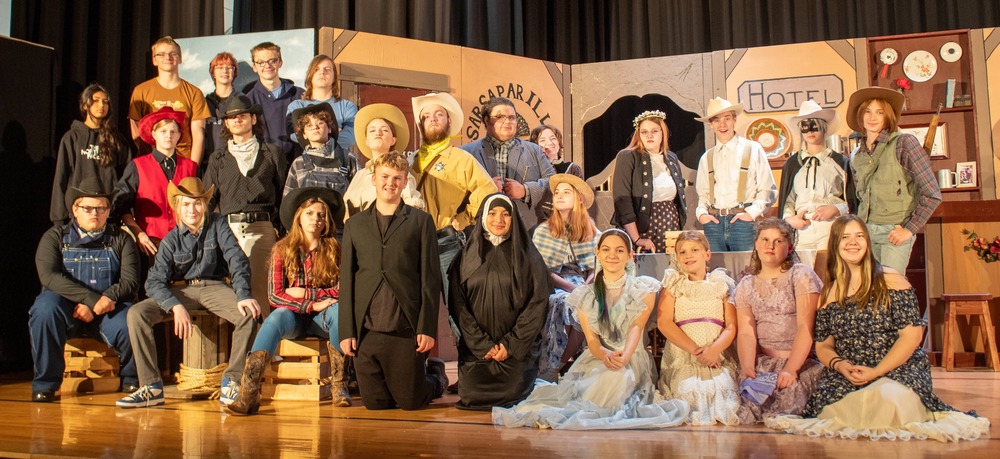
If you’ve ever wondered what happens when a group of middle and high schoolers take on the Wild West armed with scripts, paintbrushes, and an unshakable sense of humor — GFW’s recent fall play had your answer. This year’s Theatre Arts crew saddled up for How the West Was Dun, a rollicking parody of classic Hollywood Westerns, and the students didn’t just rise to the challenge — they owned it.
Director Joe Vos selected the show with intention. With its 12 lead roles, it’s tailor-made for giving emerging performers real stage time and the confidence-building reps that only live theater can offer.
“I chose this play because it has 12 lead roles, which allows students who are newer to theater to get real stage time and dive right into the skills needed to be a part of a play,” said Vos. “The students did everything for this show, including the sets and the costumes. They would run lines together in other parts of the day on their own and really showed a commitment to the program that is a sign of fantastic character and collaboration.”
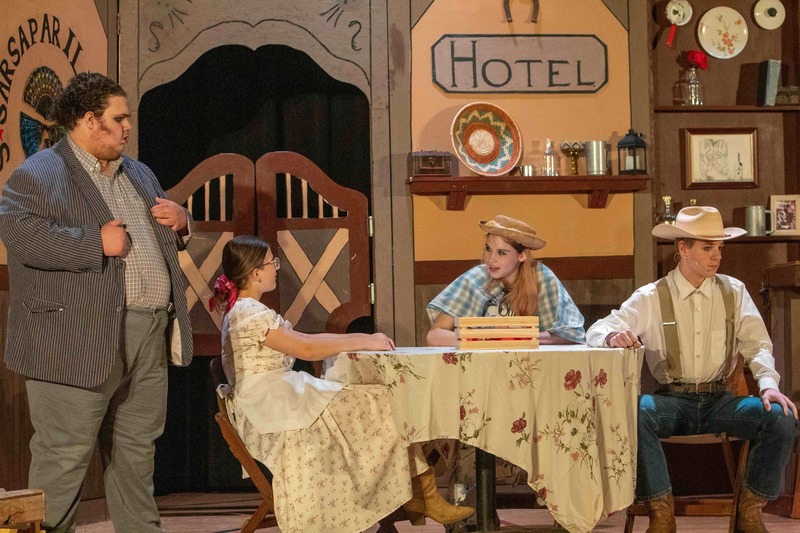
A comedic showdown between Sheriff Wayne John, a cadre of villains, and a wealthy troublemaker scheming to marry Polly Wanda Cracker for her land brought plenty of laughs — and even more opportunities for students to step outside their comfort zones.
This year, instead of three public performances, the cast staged one show during the school day. The reaction? Off-the-charts enthusiasm. Many students got their first-ever glimpse at what it takes to produce a play: the backstage rush, the quick-change magic, the technical wizardry, and the thrill of a live performance unfolding right in front of them.
“It costs money to put these plays on, but we built in some efficiencies over the past two years, and we came out ahead even with just two performances instead of three,” said Vos. “Theater is totally different from anything else that is out there because there are so many skills that it brings that transfer to real life.”
It’s been a rebuilding year for the program, with fewer upperclassmen but an energetic wave of younger students eager to carry the torch. In a small district like GFW, a strong performing arts program is more than an extracurricular — it’s a lifeline for students who might not see themselves in athletics or other activities but shine under the lights of a stage.
“I am a full-on advocate of the arts, and performing arts is a different animal altogether that teaches public speaking, confidence, and teamwork,” said Vos. “Programming like this is essential because every student counts! If I can help one student gain confidence by performing on the stage, that is the goal, and that is the win.”
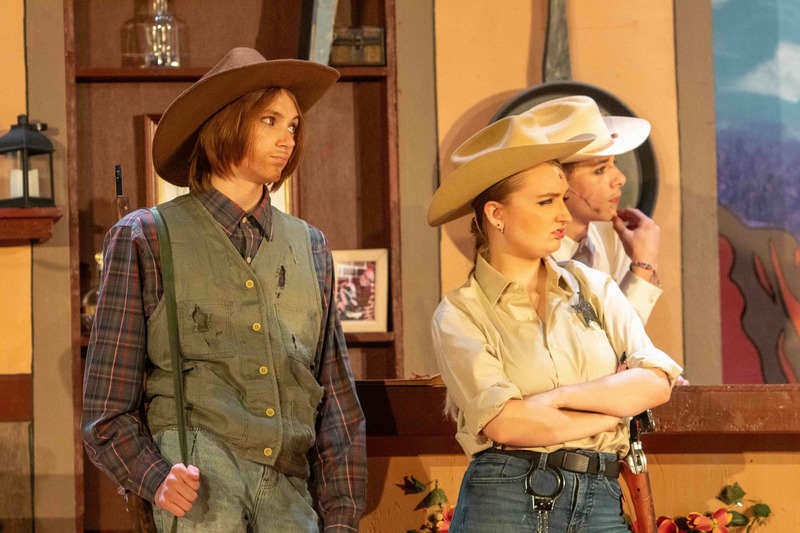
With grit, creativity, and a whole lot of laughter, GFW’s young performers proved once again that when the curtain rises, every student has a place — and a part worth playing.